phpstorm automatic upload not uploading all directories
Tutorial: Deployment in PhpStorm
This tutorial aims to accept you stride-by-pace through configuring and managing deployment of your code to remote hosts, using PhpStorm.
Configuring a deployment server
Click  on the chief toolbar or press Ctrl+Alt+S to open the Settings/Preferences dialog, and choose the Deployment folio (you can access the same folio by choosing from the main bill of fare).
Click  , then in the Add Server dialog, type your server name
 MyRemoteServer and select its type (in our case, this is Local or mounted folder):
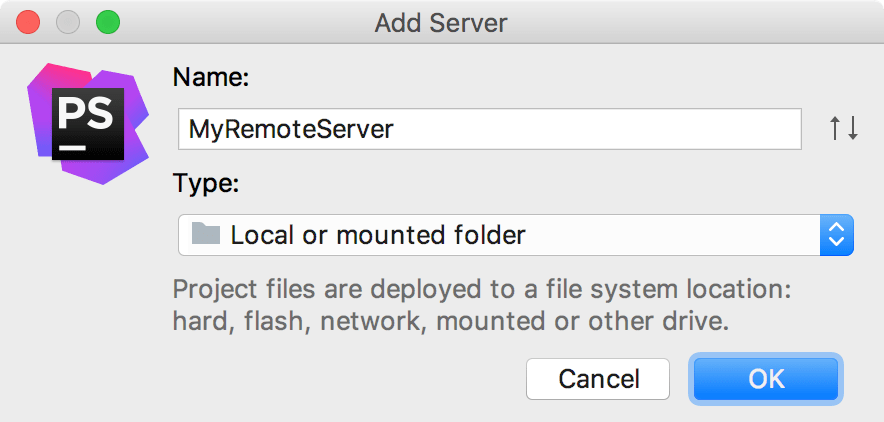
OK, the new server is added, but it is notwithstanding void... Information technology merely shows the Spider web server URL http://localhost, where you will actually browse your uploaded files.
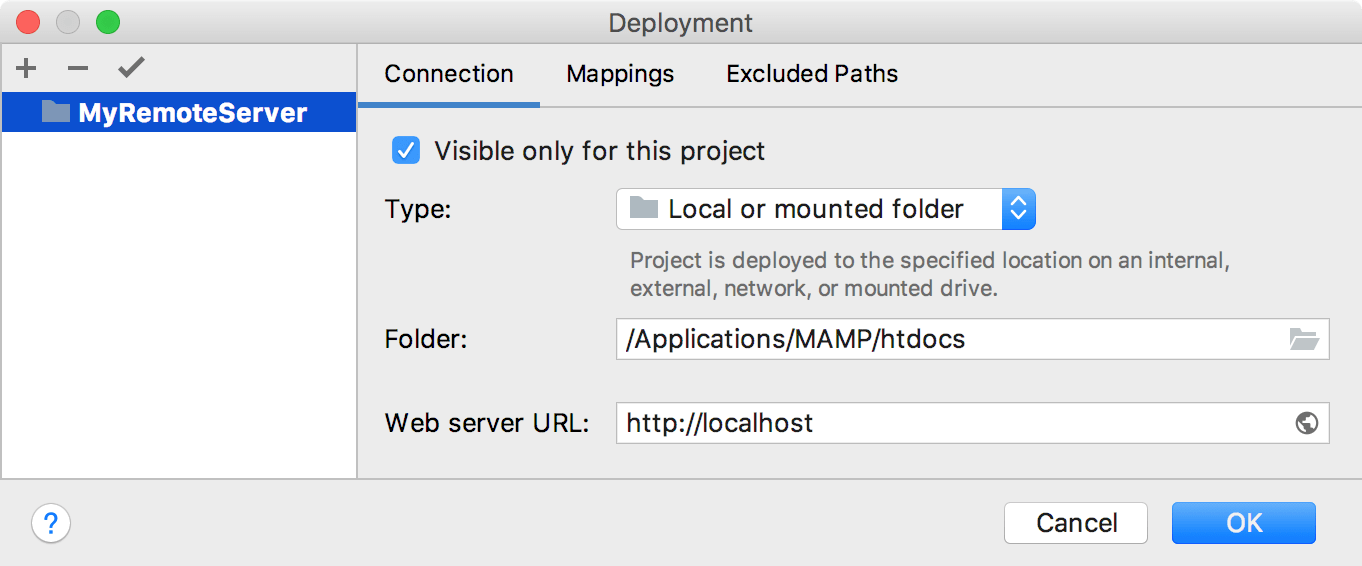
What is specified in the Connection tab?
Select the directory where the projection files volition exist uploaded. In our case, this is the /Applications/MAMP/htdocs local folder. Yous tin can either type the path manually, or printing Shift+Enter.)
What is specified in the Mappings tab?
Next, switch to the Mappings tab. Past default, the Local path field contains the path to the projection root. Nonetheless, you lot tin can select whatsoever other directory within your projection tree. Let's assume the default value.
In the Deployment path field (which is past default empty), specify the folder on your server, where PhpStorm will upload data from the folder specified in the Local path field: in this example, it'southward myApp. This path is specified relative to the web server root folder, which is /Applications/MAMP/htdocs.
Finally, accept the default / value for Spider web path:
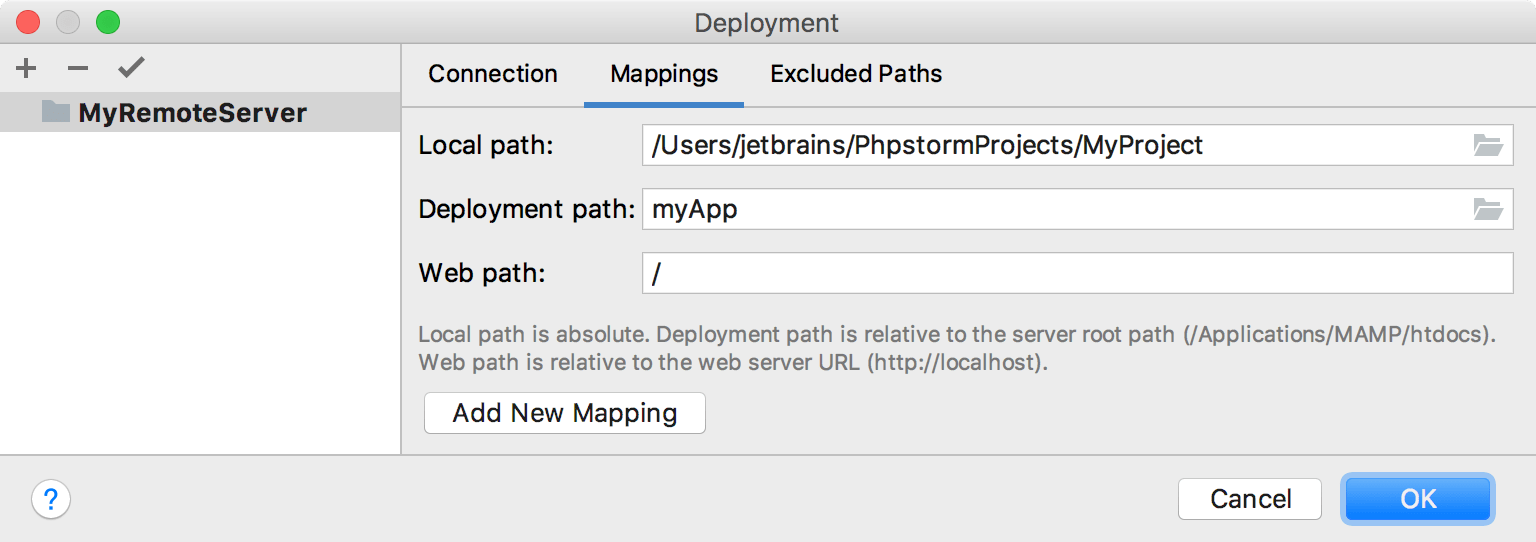
Afterward you use the changes, the server is set to use.
Browsing remote hosts
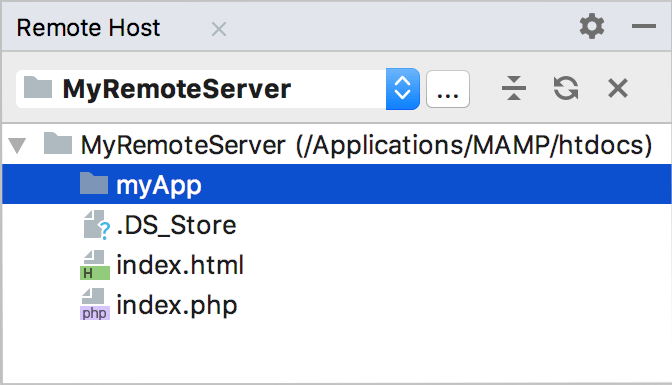
To make sure your server is up and running, select in the main carte du jour, and the Remote Host tool window appears on the right of the PhpStorm window:
Next, let's perform some deportment, and see what happens.
Uploading
First, allow's upload i of the files to the remote server.
In the Projection tool window, right-click a file you desire to upload. In our case, let it be the header.php file . From the context menu, choose , and see the upload results.
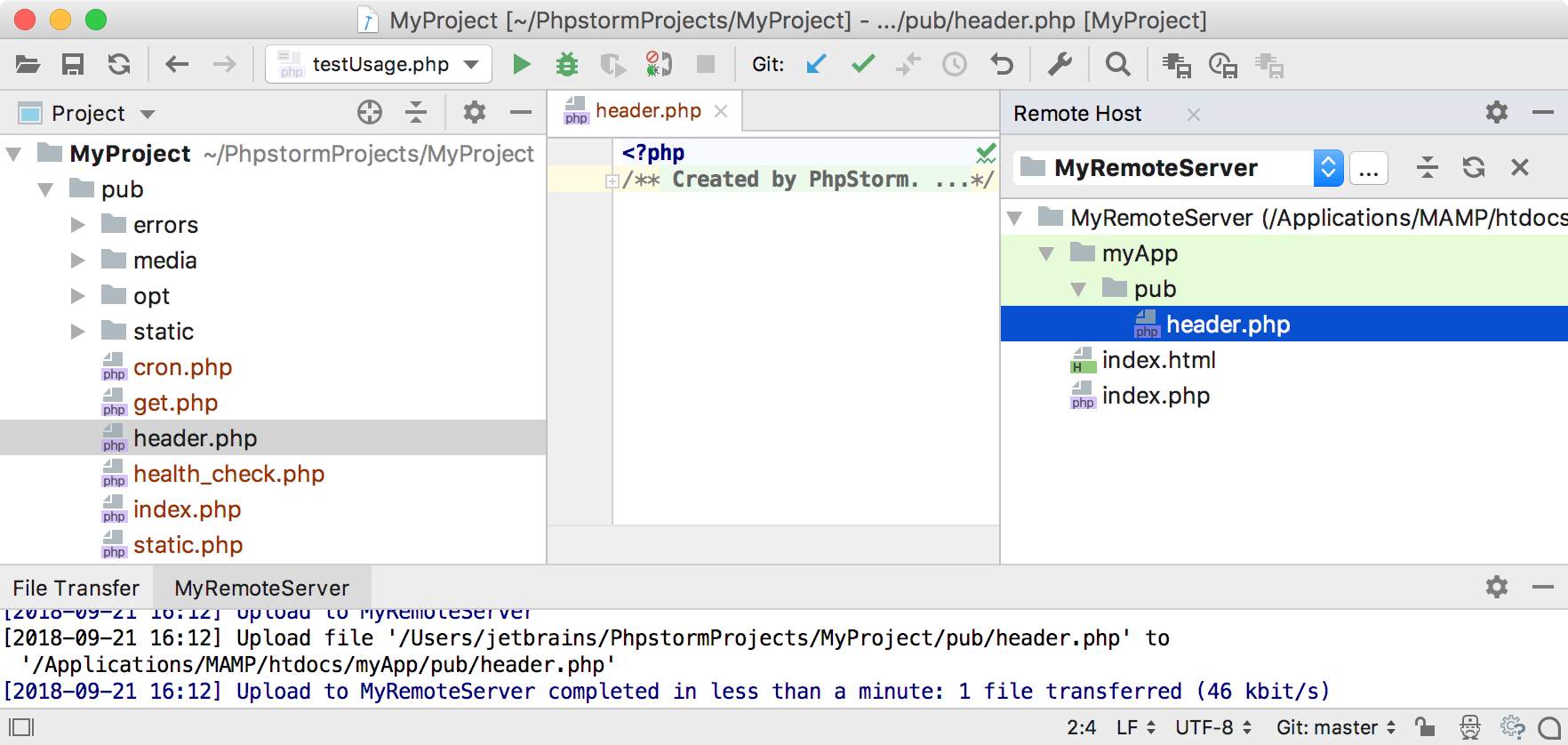
You tin can besides upload contents of each directory within your project. For instance, right-click the parent directory of the , namely, src header.php and cull from the context carte du jour. Nosotros at present have the entire directory uploaded to the server:

Comparing remote and local versions
At that place is a local and a remote copy of the header.php file , and they are identical. Allow's change the local version.
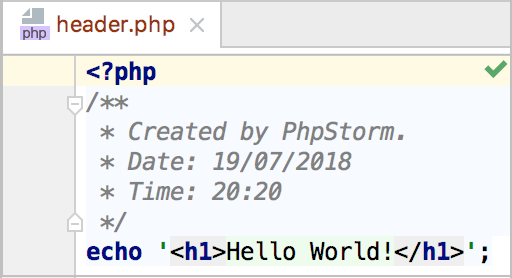
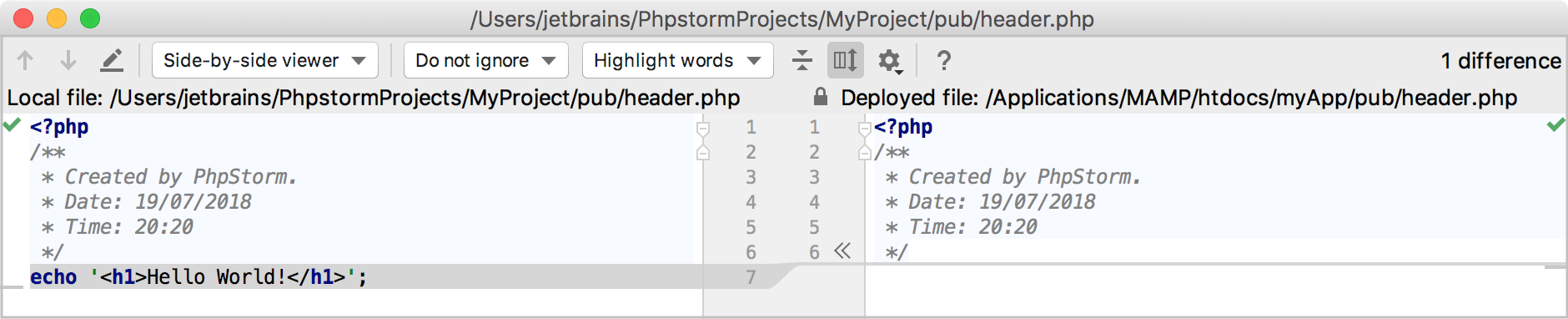
Now we've changed the local version. Let'southward brand sure PhpStorm knows virtually these changes. To do that, get to the Remote host tool window tool window, and correct-click . From the context menu, choose . PhpStorm opens the differences viewer.
Downloading
In the Remote host tool window tool window, correct-click the file , and cull Download from here in the context menu. PhpStorm shows a warning:
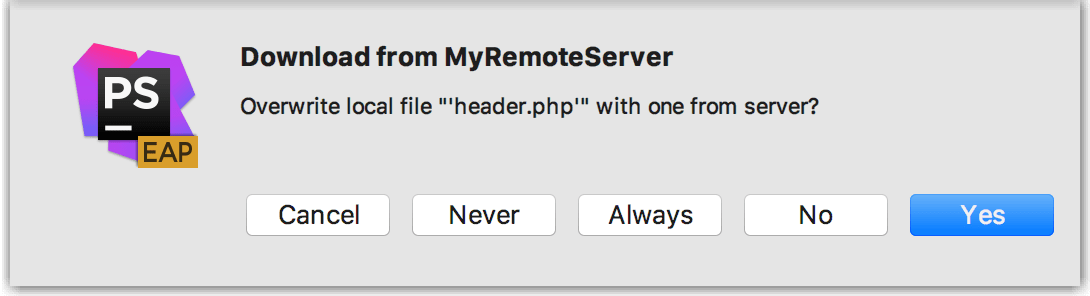
Click Yep:

You can also download an entire directory, if it has been previously uploaded to the server. For example, if you click the parent pub directory and choose the same command, all nested files volition be downloaded from the server.
Synchronizing changes
Make a preliminary step - rollback the changes to the header.php file Ctrl+Z.
Next, click header.php, and in the main carte du jour choose :
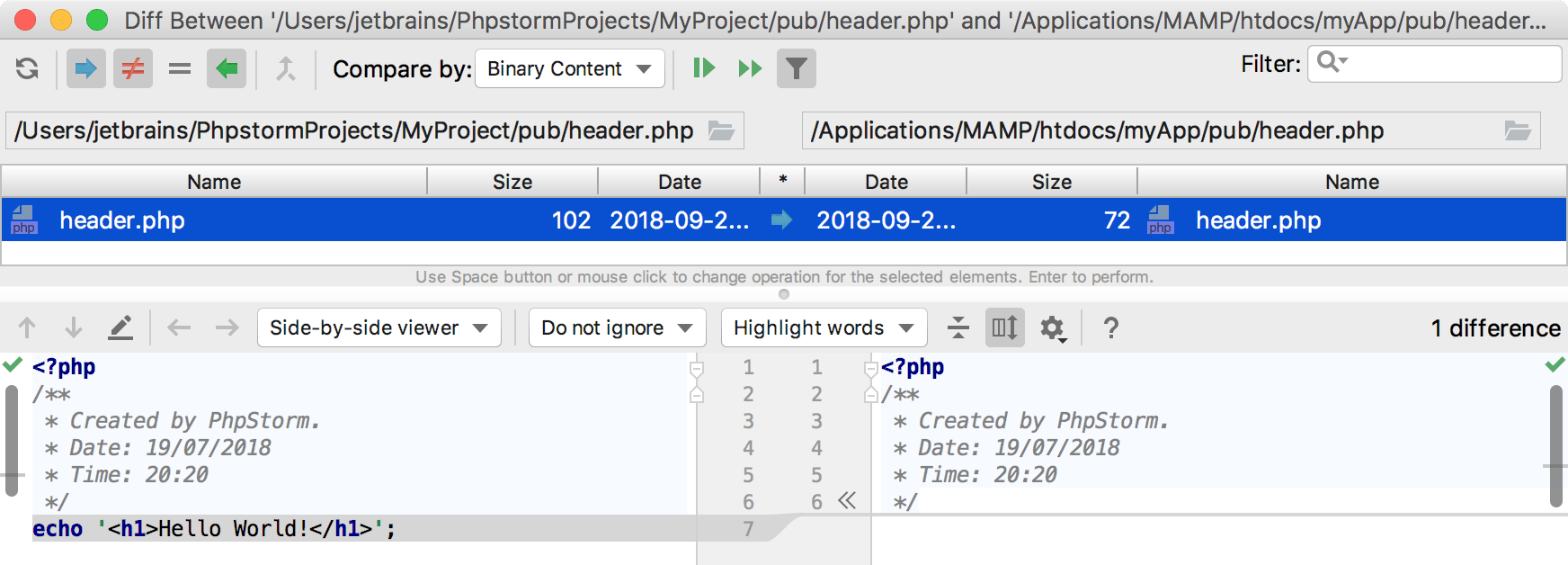
PhpStorm shows differences viewer, where yous can accept individual changes or refuse them.
Automatic upload to the default server
When you need to have the verbal same files on the server as in a PhpStorm project, automatic upload can be of help. Automatic upload ways that whenever a modify occurs in the IDE, it will be deployed to the default deployment server.
Defining a server as default
A deployment server is considered default if its settings apply by default during automatic upload of changed files. To define a deployment server as the default one, follow these steps:
-
Choose the desired server on the Deployment folio (in our case, MyRemoteServer). You lot can open this page it ii possible means: either Settings/Preferences | Build, Execution, Deployment | Deployment, or from the main card.
-
Click
 .
.
Enabling automatic upload
As before long as the default server is set, you lot can make upload to this server automatic. This tin can exist done in the following two ways:
-
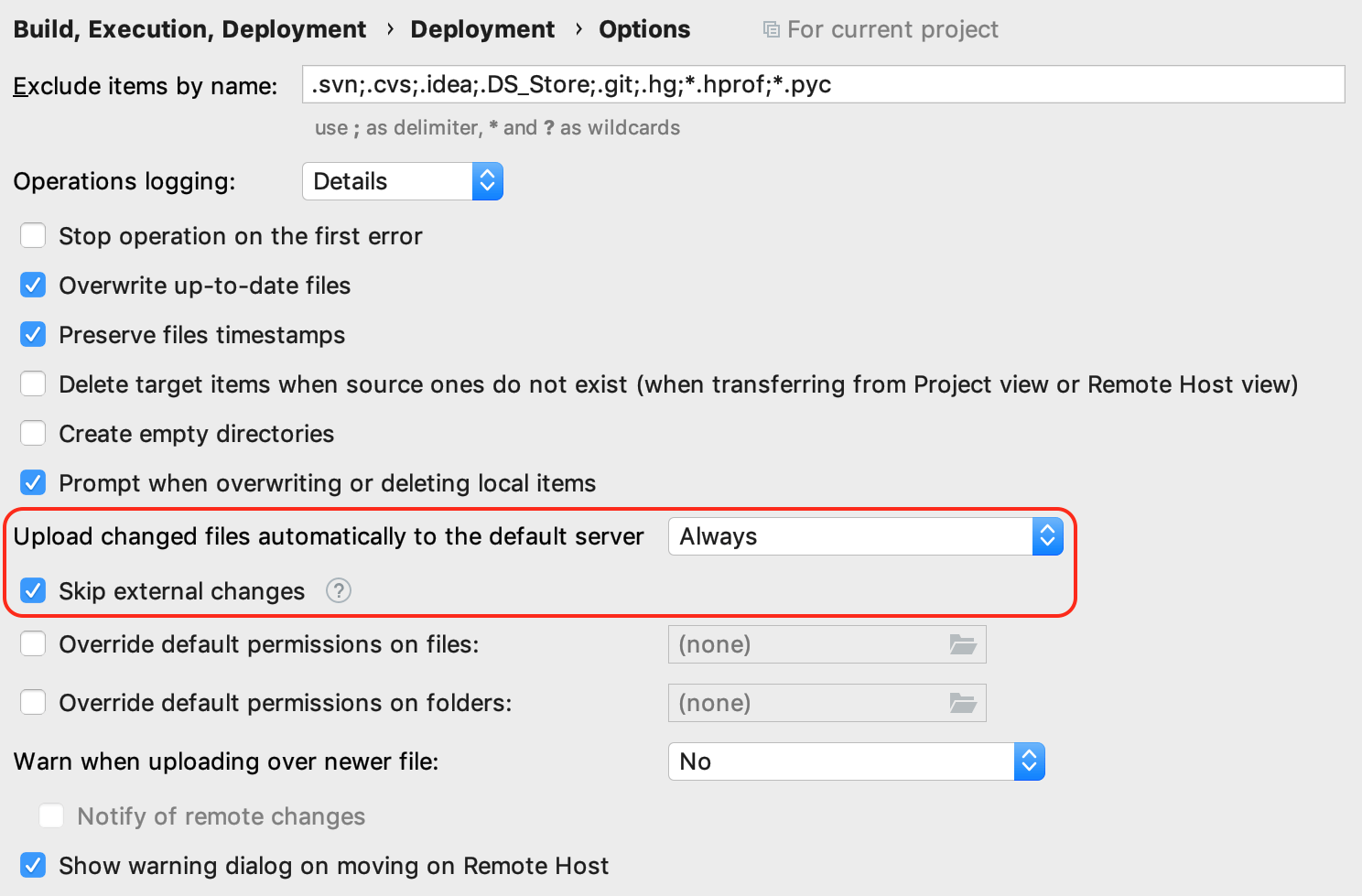
Open up the deployment Options (Settings/Preferences | Deployment | Options or from the chief menu), and in the Upload changed files automatically to the default server field choose Always, or On explicit salve activity. The divergence betwixt these two choices is explained in the field description.
-
In the master menu, select . Note that automatic upload in this instance is performed in the Always manner.
It is worth noting that the Always mode is not recommended for deploying to production: incomplete code can be uploaded while developing, potentially breaking the product application.
Uploading external changes
By default, PhpStorm also uploads the files if they are changed by some external process, such every bit a VCS branch change, compilation of SASS or LESS, or a File Watcher. To change this beliefs and skip external changes, set Upload inverse files to the default server to Ever and select the Skip external changes checkbox:
Summary
Congrats! You lot've passed this very basic tutorial and performed the following tasks:
-
Created and configured a server of your own.
-
Uploaded and downloaded files and folders.
-
Compared local and remote versions.
-
Configured the server as default.
-
Enabled automatic upload of external changes.
Concluding modified: 13 April 2022
harriswitswoompose.blogspot.com
Source: https://www.jetbrains.com/help/phpstorm/tutorial-deployment-in-product.html

Post a Comment for "phpstorm automatic upload not uploading all directories"